Lenses
Focal length is point of view, not zoom luxury
A lens decides how space compresses, how backgrounds melt, and how close you can stand to a subject — mount compatibility determines whether glass is native, adapted, or a deliberate manual project.
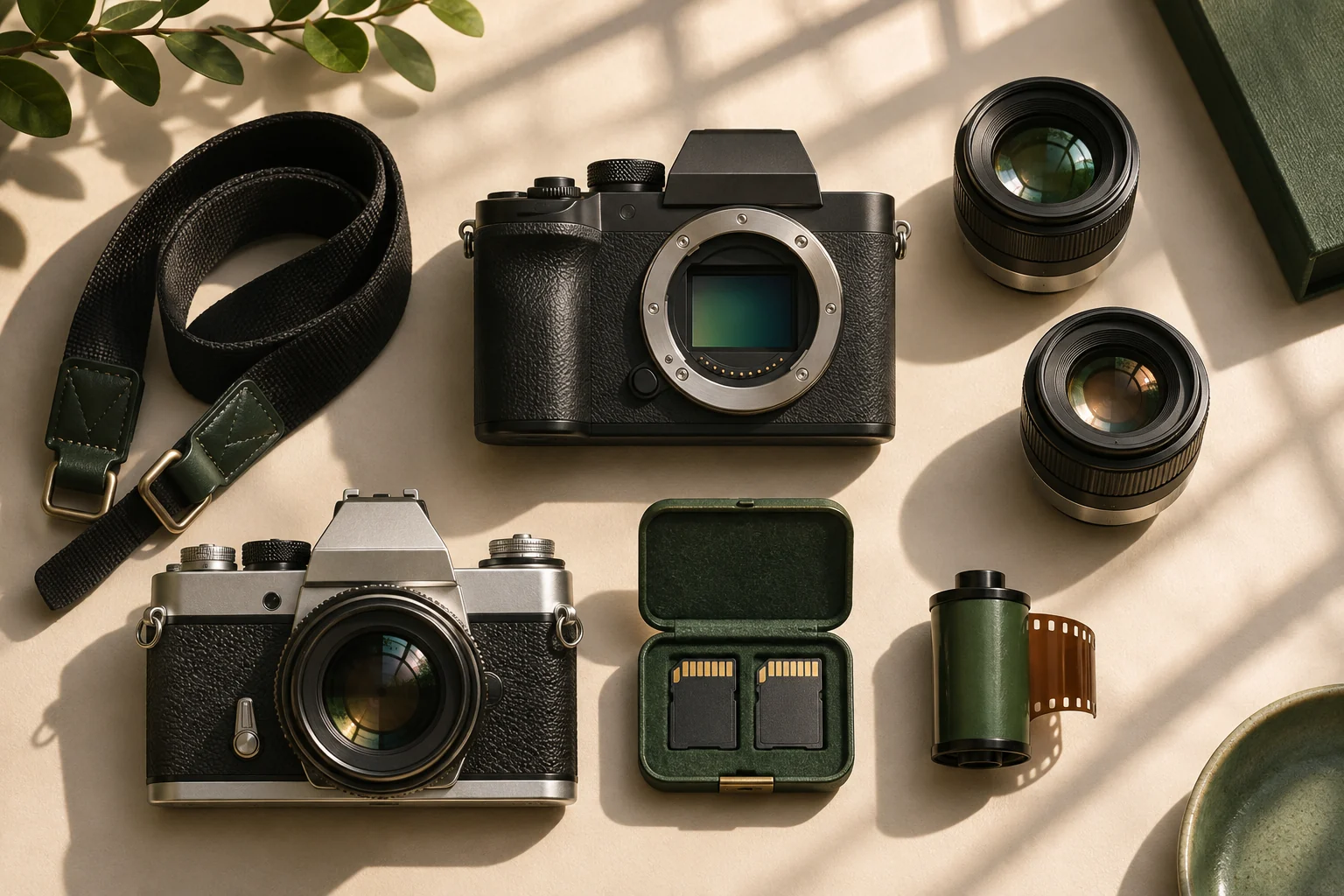
Reading focal length
Short lenses embrace rooms and alleyways; long lenses flatten faces and reach across fields. On the same body, swapping length changes story more than adding megapixels.
- Wide — Great for architecture and tight interiors; watch edge distortion on faces.
- Normal — Near human perspective; versatile for documentary carry.
- Tele — Isolates subjects; demands steady hands or support.
Mount compatibility
Adapters can bridge systems, but infinity focus, aperture control, and autofocus may not follow. Ask whether a lens is native to your body or a deliberate manual project.
Flange distance and register matter — a lens that clears on one mirrorless mount may need correction rings on another.
Aperture and minimum focus
- Wider apertures gather light and narrow depth; they also reveal focus mistakes faster.
- Close-focus distance limits table-top work and portrait headroom.
- Macro-capable lenses trade convenience for magnification and working distance.
Prime versus zoom for a first kit
One quality prime forces you to move your feet; a restrained zoom covers travel days when changing lenses in rain is unappealing. Many photographers start with a normal prime and add specialty glass later.
Back to cameras